
Key Takeaways
- Sending a novelty prank mail tube through USPS is completely legal
- It's a joke product shipped as standard mail — no threats, no harmful content, no violations
- The First Amendment protects humor and parody, and USPS delivers anything with proper postage that isn't a prohibited item
Every week, someone sits in front of their laptop, cursor hovering over the checkout button, and asks the exact same question: am I allowed to do this? It's a reasonable question. The product name on the label is deliberately ridiculous. The concept sounds like it might live in a legal gray zone. It doesn't. Here's everything you need to know.
What, exactly, is anonymous prank mail?
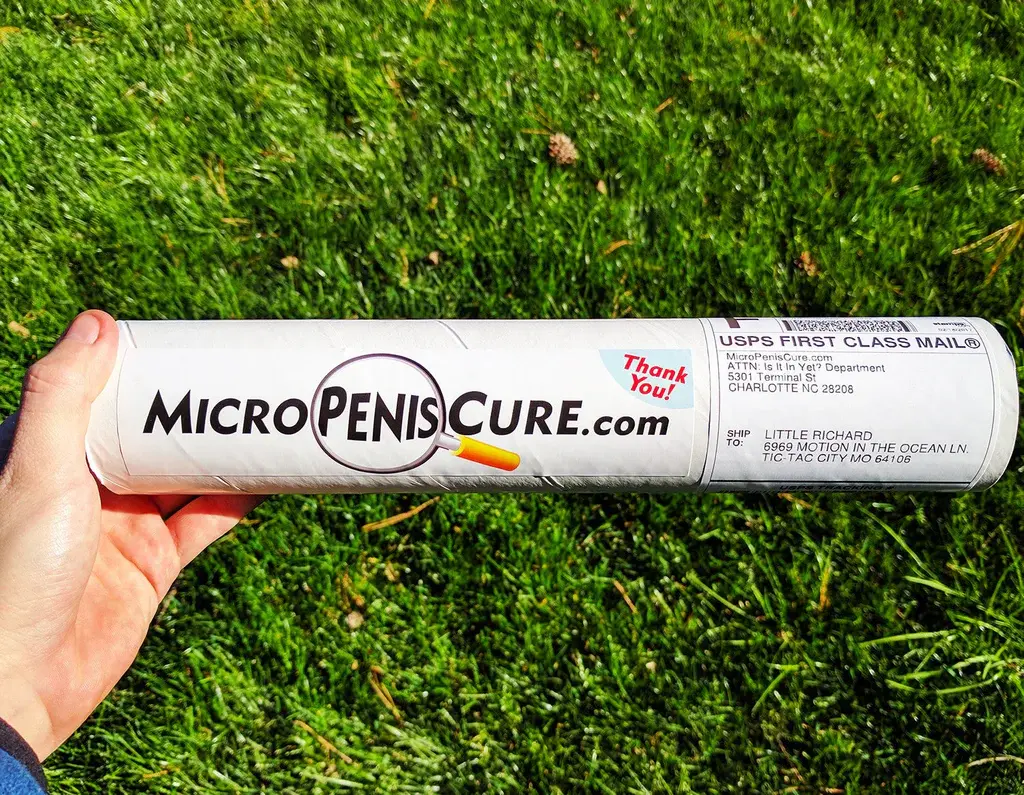
A prank mail tube is a cardboard mailing cylinder — the same kind used to ship posters or blueprints — with a joke company name printed on the outside label. Products like MicroPenisCure and BigAssDildos.com Wholesale Supply arrive looking entirely official. There's a real mailing address (yours, for the recipient). There's real postage. USPS scans and delivers it exactly like any other parcel. Inside is a letter revealing it's a harmless gag — and nothing else. No powders, no prohibited items, no threats.
The label is the prank. Everything else is a normal package.
Is it legal under federal law?
Yes. Federal law prohibits mailing items that are obscene, threatening, or constitute harassment — none of which applies here. Courts have consistently held that novelty, parody, and humor occupy protected territory under the First Amendment. A tube with a funny URL printed on the outside is not obscene by any legal definition. It contains no prohibited materials. It does not threaten anyone. It does not constitute a pattern of harassment (it's a single package).
USPS regulations require that packages contain proper postage, accurate delivery addresses, and no prohibited contents. Prank mail satisfies all three conditions. The postal service has no mechanism to regulate or penalize the label design on a package, and no interest in doing so.
Is it considered harassment?
No. Legal harassment requires a pattern of unwanted conduct that causes distress — typically repeated contacts, threats, or systematic targeting. One funny package in the mail does not meet that threshold by any reasonable legal or colloquial standard. Courts look at context, intent, and effect. A novelty mailing from a joke company that reveals itself as a joke inside the package has none of the markers of harassment.
The recipient of a prank mail tube receives one item in the mail, opens it, reads a letter explaining it's a gag, and then either laughs or texts everyone they know. That's the full arc of the experience.
What if they call the police?
They won't. But suppose they did — there's nothing for the police to act on. No crime has occurred. Officers would review the package and find a novelty mailing cylinder with a humorous label, standard postage, and an explanatory letter inside. Even in the extremely unlikely scenario where someone files a report, the responding officer would explain that receiving mail is not illegal and neither is sending it.
In practice, recipients show the tube to their coworkers, text photos to their family group chat, and spend the next week trying to figure out who sent it. Filing a police report doesn't make the list.
What about workplace delivery — is that different?
Delivering to a workplace address doesn't change the legal picture. The tube goes through the same USPS system and follows the same regulations. The only difference is the audience: a tube labeled MicroPenisCure sitting in a shared office mailroom tends to generate significantly more commentary than one arriving at a private residence. Whether that's a feature or a bug is entirely up to the sender.
What makes something actually illegal to mail?
For context, items that genuinely cannot be mailed include: hazardous materials, controlled substances, explosive devices, explicit sexual content sent to minors, items accompanied by explicit threats, and communications designed to extort. A cardboard tube with a joke URL on it appears on none of these lists.
The bottom line
Anonymous prank mail is legal. USPS delivers it. The First Amendment protects it. The recipient receives one mailing, discovers it's a joke, and that's the end of it. If you've been on the fence because of legal concerns, those concerns don't apply here.
Still curious about how the anonymity actually works — what the sender sees, what the recipient sees, and what can't be traced? Read exactly how the anonymity system works.
Ready to send one?
Free shipping. Lifetime satisfaction guarantee. If it's not funny, it's free.
Shop Prank Mail How to Stay Anonymous →